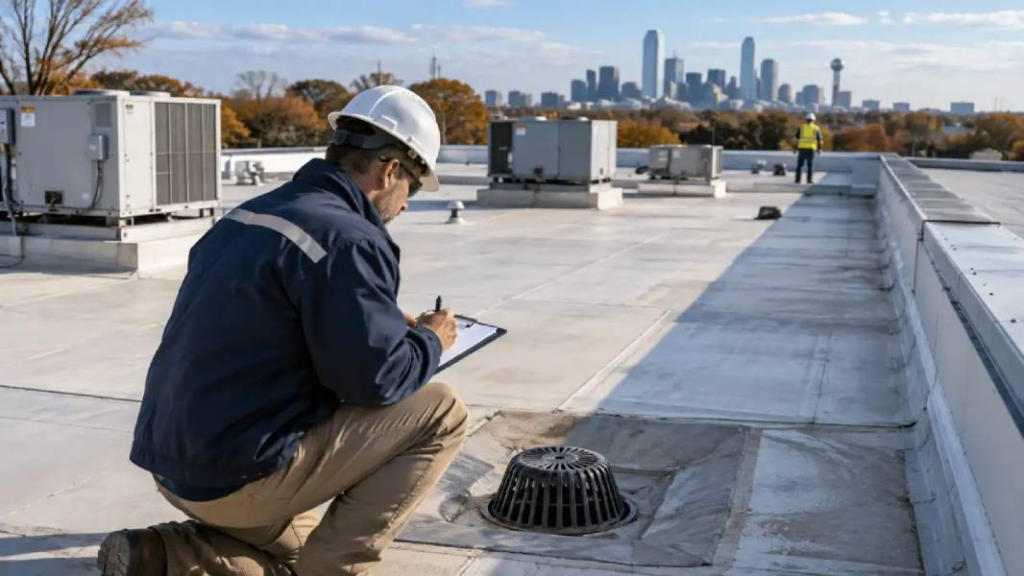
For business owners and property managers in Dallas–Fort Worth, maintaining a commercial roof is an important part of protecting the building, its occupants, and daily operations.
A commercial roof may appear to be functioning normally while small problems develop around drainage systems, roof seams, flashing, and rooftop equipment. Without regular attention, those issues can become more complicated when heavy rain, strong winds, or seasonal temperature changes affect the property.
November is a practical time to review the roof’s condition and address existing maintenance concerns before the cooler months arrive.
An organized commercial roof maintenance plan can help property managers identify visible defects, document roof conditions, schedule appropriate repairs, and make more informed decisions about future roofing expenses.
This guide explains the important components of a commercial roof inspection, common maintenance concerns for DFW properties, and how to prepare a roofing system for changing weather conditions.
Why Commercial Roof Maintenance Matters in North Texas
Commercial roofing systems differ from residential roofs in their materials, layouts, drainage designs, and maintenance requirements.
Many business facilities have low-slope roofing systems with large surface areas, rooftop HVAC equipment, drains, penetrations, and other components requiring regular attention.
Because these roofs can cover substantial areas, small defects may be difficult to detect without a structured inspection.
North Texas weather also creates additional challenges. Commercial buildings experience prolonged sunlight and heat, seasonal rainfall, occasional freezing conditions, and strong winds associated with severe storms.
The combination of weather exposure and normal building operations can contribute to material wear, deteriorating seams, drainage restrictions, and other issues.
Preventive maintenance helps property owners understand the current roof condition rather than discovering problems only after they interfere with business operations.
For larger buildings, organized maintenance records can also support budgeting, warranty management, and long-term capital planning.
1. Review Your Commercial Roofing System
Before developing a maintenance checklist, identify the type of roofing system installed on the building.
Common commercial roofing materials include single-ply membranes, modified bitumen, built-up roofing, metal roofing, and other specialized systems.
Each material has specific installation details, inspection methods, and maintenance considerations.
For example, a metal roof may require examination of panel seams, fasteners, protective coatings, and flashing.
A single-ply membrane roof may need attention around welded seams, penetrations, perimeter terminations, and areas where the membrane has been punctured or damaged.
The original installation documents, warranty paperwork, and previous inspection reports can help identify the roof assembly.
If the roofing system is unknown, a qualified commercial roofing contractor can evaluate it and recommend an appropriate inspection approach.
Businesses looking for qualified help can explore commercial roofing services in Dallas–Fort Worth to find professionals serving their properties.
2. Inspect Commercial Roof Drainage Systems
Drainage is one of the most important components of commercial roof maintenance.
Low-slope roofing systems are designed to direct water toward drains, scuppers, gutters, or other appropriate drainage points.
When debris blocks these areas, rainwater may accumulate on portions of the roof.
Standing water can increase the load on a structure and expose vulnerable roofing materials to prolonged moisture. Depending on the roof design, persistent ponding may also indicate drainage or structural concerns.
During a professional inspection, drainage points should be checked for leaves, sediment, trash, and other obstructions.
The surrounding roof surface should also be examined for signs of recurring water accumulation, staining, or damaged materials.
Property managers should document locations where ponding regularly occurs, particularly when water remains long after ordinary rainfall.
Drainage problems should be evaluated by professionals familiar with the specific roof system and the building’s structural requirements.
3. Examine Roofing Membranes and Surface Materials
A commercial roofing membrane serves as an important weather barrier.
Over time, weather exposure, foot traffic, maintenance activities, and rooftop equipment work may affect its condition.
A professional roof inspection should look for punctures, tears, open seams, blistering, separation, deteriorated coatings, and unusual surface wear.
The significance of each condition depends on the material and roof assembly. A small surface irregularity does not always indicate a serious defect, but some openings can allow water to enter concealed roof layers.
When a potential problem is identified, the roofer should evaluate whether repair is necessary and whether moisture may have reached the insulation or decking.
Avoid assuming that all visible defects can be corrected with the same sealant or patching material.
Using incompatible repair products may create additional problems or affect warranty coverage.
4. Check Flashing Around Roof Edges and Penetrations
Commercial roofs often have numerous areas where flashing is required.
These include parapet walls, roof edges, HVAC curbs, plumbing vents, skylights, equipment mounts, and structural penetrations.
Flashing protects the transitions between different roofing components and helps direct water away from vulnerable connections.
During maintenance inspections, professionals should look for loose metal, separated membrane edges, deteriorating seals, open joints, and signs of water intrusion.
Roof perimeter areas deserve particular attention because strong winds may place significant stress on edge components.
When a defect is found, the roofer should determine whether the material can be properly repaired or whether a section requires replacement.
Temporary patching should not be confused with a complete repair when the underlying installation has been compromised.
5. Review Rooftop HVAC Equipment and Maintenance Access
Commercial buildings frequently have HVAC units, ventilation equipment, and other mechanical systems installed directly on the roof.
These installations create additional maintenance considerations.
Technicians may need to access the roof regularly, and repeated foot traffic can affect certain roofing materials when designated walkways or protection systems are inadequate.
Equipment curbs, mounting connections, and penetrations also require appropriate flashing and sealing.
Property managers should coordinate roofing inspections with routine mechanical equipment maintenance whenever practical.
This coordination can help identify issues before multiple contractors work around the same vulnerable area.
A roofing professional may recommend designated maintenance pathways, compatible protection pads, or repairs to damaged roof surfaces near mechanical equipment.
Any recommendations should be appropriate for the existing roofing system and comply with relevant building and safety requirements.
6. Inspect Commercial Metal Roofs for Wear
Metal roofing systems require a different maintenance approach from many membrane roofs.
Depending on the roof design, inspection may include panels, fasteners, seams, coatings, penetrations, roof edges, and areas where different materials connect.
Loose components, corrosion, damaged sealants, or displaced panels may require professional attention.
Metal roofs expand and contract as temperatures change. Properly designed systems accommodate this movement, but damaged or improperly installed details can create maintenance concerns.
Standing-seam and exposed-fastener metal roofs also have different inspection requirements.
Property owners should not assume that metal roofing is completely maintenance-free.
Businesses with metal roofing systems can review metal roofing services in DFW when evaluating repair or maintenance options.
7. Look for Interior Signs of Commercial Roof Leaks
Not all roof problems are visible from the exterior.
Interior observations can help identify areas where moisture may have entered the building.
Look for discolored ceiling tiles, water stains around interior walls, damp insulation, unusual odors, or recurring moisture near mechanical equipment.
The location of an interior stain may not correspond directly with the location of the roofing defect.
Water can travel along structural elements, roofing layers, or other building components before becoming visible.
Because commercial buildings often contain electrical equipment, inventory, and occupied work areas, active leaks should be evaluated promptly.
If water is affecting electrical systems or creating unsafe conditions, restrict access to the affected area and involve appropriately qualified professionals.
Keep photographs and written records showing when the leak appeared, weather conditions, and the areas affected.
This documentation may help the roofing contractor trace the source and assess the extent of the problem.
8. Schedule Roof Maintenance Before Severe Weather
A preventive maintenance schedule should reflect the building’s roof type, age, condition, and environmental exposure.
As a general planning approach, many commercial properties benefit from professional inspections in spring and fall, with additional checks after significant weather events.
However, individual buildings may require a different schedule based on warranty provisions, rooftop activity, previous repairs, and the contractor’s recommendations.
Autumn inspections can help identify drainage blockages, deteriorated seams, flashing defects, and damage that occurred earlier in the year.
The Insurance Institute for Business & Home Safety’s commercial loss-control resources include guidance and tools intended to help evaluate vulnerabilities in commercial properties, including roof-related maintenance concerns.
Property managers should use an inspection schedule as part of a broader maintenance strategy instead of treating it as a guarantee against future leaks or storm damage.
9. Maintain Proper Roof Safety Procedures
Commercial roofing work presents significant safety risks, particularly near roof edges, skylights, openings, and elevated equipment.
Only appropriately trained and equipped personnel should perform rooftop inspections or maintenance activities.
Property managers should establish procedures governing roof access, contractor coordination, and work near hazardous areas.
Rooftop equipment servicing should also account for fall hazards and any building-specific safety restrictions.
The Occupational Safety and Health Administration’s fall protection guidance explains the importance of preventing falls from elevated work areas and maintaining appropriate workplace safeguards.
Businesses should verify that contractors follow applicable safety requirements and understand the property’s access conditions.
Routine visual observations from safe interior locations can help identify some concerns, but they should not be used as a substitute for a qualified roof inspection.
10. Keep Commercial Roof Maintenance Records
Organized records are valuable for both day-to-day property management and long-term financial planning.
A useful maintenance file may include roof installation documents, warranty terms, inspection reports, photographs, repair invoices, and notes about recurring leaks.
When work is completed, record the affected location, materials used, date, and contractor information.
Consistent documentation can reveal patterns that are difficult to recognize from individual service calls.
For example, repeated leaks around the same HVAC curb may indicate that the original problem has not been fully resolved.
Maintenance records may also help determine whether the roofing system is approaching a point where broader repairs or replacement should be evaluated.
If the building has a manufacturer or contractor warranty, review its maintenance requirements carefully.
Some warranties contain specific conditions concerning inspections, repairs, approved materials, and documentation.
11. Create a Commercial Roofing Maintenance Budget
Preventive maintenance should be included in the property’s operating and capital planning process.
The appropriate budget depends on the building’s size, roof materials, age, complexity, previous maintenance history, and known deficiencies.
Property managers should distinguish between routine maintenance, localized repairs, and major roofing projects.
Routine work may include inspections, debris removal, and minor maintenance performed by qualified personnel.
Localized repair expenses may involve damaged membrane sections, flashing components, or drainage-related defects.
Larger projects may require investigation of deteriorated insulation, extensive roof damage, or conditions affecting a significant portion of the system.
Request written estimates that explain the scope of work and distinguish necessary repairs from optional improvements.
A well-documented maintenance program can make future planning more predictable, even though it cannot eliminate unexpected roofing expenses.
12. Know When Commercial Roof Repair or Replacement Is Necessary
Not every commercial roof leak requires a replacement project.
If the roofing system remains generally serviceable and damage is isolated, localized repair may be appropriate.
More extensive intervention may be necessary when moisture has affected large areas of insulation, seams repeatedly fail, or the roofing system shows widespread deterioration.
The roof’s age, past repairs, warranty status, and the remaining condition of the assembly should all be considered.
Commercial property owners should request an explanation of why a repair or replacement is recommended.
When possible, ask for inspection photographs, an assessment of affected materials, and a written description of the proposed work.
Making a roofing decision based on the actual building condition is more useful than applying the same recommendation to every leak.
Frequently Asked Questions
How often should commercial roofs be inspected?
Spring and fall inspections are a useful planning baseline for many properties. Additional inspections may be appropriate after severe storms or when active leaks occur. The correct frequency depends on roof condition, manufacturer guidance, warranty terms, and building use.
What is included in a commercial roof maintenance checklist?
A typical checklist covers drainage, roof membranes or panels, flashing, seams, penetrations, rooftop equipment, previous repairs, and interior signs of moisture. The exact items depend on the roofing system.
Can regular maintenance extend the life of a commercial roof?
Appropriate maintenance may help reduce avoidable deterioration and identify repairs before damage spreads. However, the actual service life depends on design, materials, installation quality, weather exposure, and other factors.
Should commercial roofs be inspected after strong storms?
Yes, significant wind, hail, or debris impact can justify a professional assessment, particularly when new damage or leaks are visible. Avoid sending untrained personnel onto potentially damaged roofing surfaces.
Is commercial roof maintenance expensive?
Costs vary according to building size, roof type, accessibility, maintenance requirements, and existing damage. Request a roof-specific estimate rather than assuming a standard price applies to every property.
Prepare Your DFW Commercial Property Before Winter
Commercial roof maintenance helps business owners and property managers understand the condition of an important building system.
By monitoring drainage, roofing membranes, flashing, equipment connections, interior moisture, and previous repairs, property owners can make more informed decisions and address developing concerns before they become more disruptive.
A structured inspection and maintenance plan is particularly valuable as North Texas moves into the cooler months.
Texas Local Roofer helps businesses and property managers connect with roofing professionals throughout Dallas–Fort Worth. If your facility needs a seasonal roof inspection, maintenance evaluation, or commercial roof repair, explore roofing services in Fort Worth, TX to find local roofing assistance.