
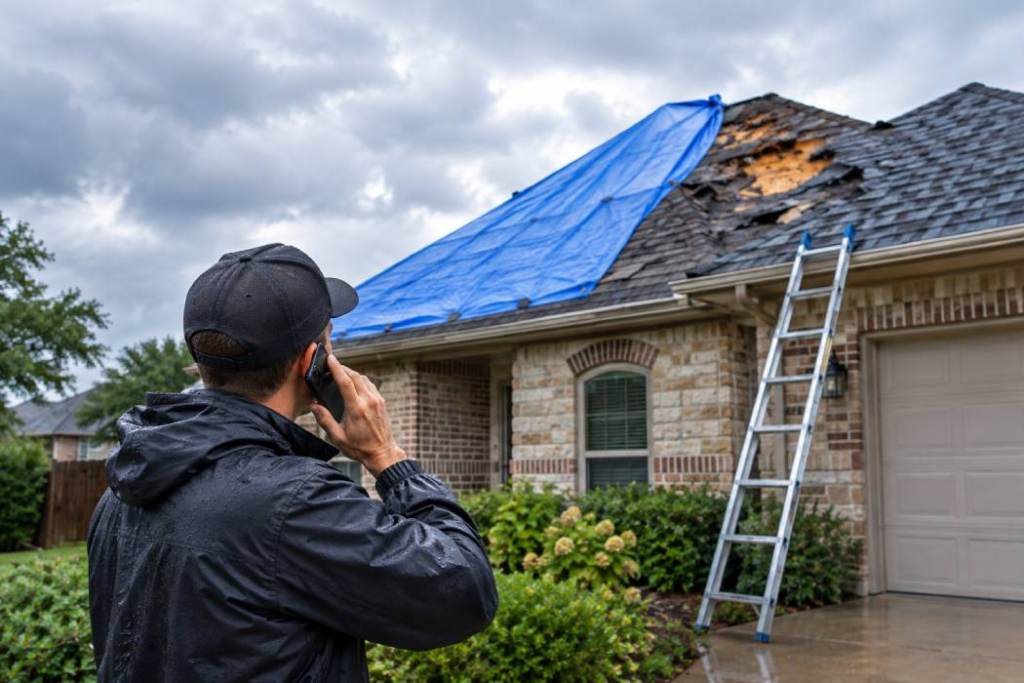
A roofing emergency rarely happens at a convenient time. High winds, a sudden hailstorm, or a fallen tree limb can tear open a section of roof in minutes, and once water starts getting into your home, every hour matters. Knowing what to do in the first few hours after damage happens can make the difference between a manageable repair and a much bigger, more expensive problem.
North Texas sees more than its share of severe weather. Between spring hailstorms, summer downbursts, and the occasional tornado warning, homeowners across Dallas, Fort Worth, and the surrounding suburbs are no strangers to sudden roof damage. Whether you’re searching for emergency roof repair near me at two in the morning or trying to figure out if your situation even qualifies as an emergency, this guide walks through exactly what to do, why speed matters, and how to prepare so you’re not scrambling the next time a storm rolls through.
What Counts as a Roofing Emergency
Not every roof issue needs an immediate response, but some situations genuinely cannot wait until regular business hours. These include:
- Active water intrusion into the attic, ceiling, or interior walls
- A large section of shingles or decking torn away by wind
- Visible structural sagging after a storm
- A tree limb or other debris that has punctured the roof
- Widespread hail damage during an active severe weather event
If you’re dealing with any of these, the priority is protecting your home and family first, then getting a roofing professional on site as quickly as possible. A missing shingle or two after a windy afternoon, on the other hand, is worth documenting and monitoring, but it usually doesn’t require a middle-of-the-night call. The distinction matters because emergency roofing crews are prioritizing active leaks, structural hazards, and open penetrations first, especially during widespread storm events when call volume spikes across the entire DFW area.
Immediate Steps to Take
- Get everyone to safety. If there’s any concern about structural damage, electrical hazards, or continued severe weather, move away from the affected area until conditions are safe. No repair, patch, or photo is worth risking injury for.
- Document the damage. Take photos and video of the roof, the interior damage, and anything that caused it, such as a fallen branch. This documentation is valuable both for your roofing contractor and for any insurance claim you may file later. Try to capture wide shots of the whole roofline as well as close-ups of the specific damage.
- Contain the water if you can do so safely. Buckets under active leaks, moving furniture and belongings out of the way, and placing a tarp over a small hole (only if it’s safe to access) can limit interior damage while you wait for help.
- Call a roofing contractor who offers emergency service. Not every roofing company operates outside business hours, so it’s worth confirming ahead of time, or during your search, that emergency roofing support is actually available around the clock. When you call, describe the type of damage, whether water is actively entering the home, and how large an area is affected. That helps the contractor prioritize your call correctly.
- Contact your insurance company. Many policies require prompt reporting of storm or wind damage, and starting the claims process early helps keep things moving. Have your policy number and the photos from step two ready when you call, and if the damage was caused by a hailstorm, a contractor who specializes in storm and hail damage roofing can help make sure nothing is missed during the adjuster’s visit.
Why Timing Matters So Much
Roof damage rarely stays the same size overnight. A small opening can widen with continued wind or rain, and water that gets into insulation, drywall, or wood framing can lead to mold growth within 24 to 48 hours. What starts as a roof repair can turn into drywall replacement, insulation removal, and mold remediation if water sits too long. Getting a temporary fix in place, even a tarp or emergency patch, buys time until a full roof repair can be completed properly.
This is especially true after hail damage, which isn’t always visible from the ground. A storm that seems to have only knocked loose a few shingles can actually have bruised or cracked the underlying mat on dozens of shingles across the roof, weakening them in ways that only show up as leaks weeks or months later. That’s one reason many homeowners in the DFW area schedule a full roof inspection after any significant hailstorm, even if there’s no obvious emergency at the moment. If the leak turns out to be isolated rather than storm related, a straightforward roof leak repair may be all that’s needed instead of a larger project.
Cost is another factor that scales with time. A roof leak caught and tarped the same day may only require a targeted repair to the damaged section. The same leak left unaddressed for a week can mean replacing sections of decking, insulation, drywall, and paint, plus dealing with mold testing and remediation. Acting quickly during the emergency phase is almost always less expensive than dealing with the secondary damage later.
What Happens When the Roofer Arrives
An emergency call typically starts with stabilizing the situation rather than completing a full repair on the spot, especially at night or during active weather. A roofer will usually:
- Assess whether it’s safe to access the roof at that time
- Apply a temporary tarp or patch to stop ongoing water intrusion
- Document the damage for insurance purposes
- Schedule a full inspection and permanent repair once conditions allow
This two step approach, temporary stabilization followed by a complete repair, is standard practice across the roofing industry and helps prevent further damage while avoiding unsafe work conditions in the middle of a storm. It’s worth knowing this ahead of time so you’re not surprised when the emergency crew doesn’t replace the entire roof section on their first visit. The goal of that first call is to stop the bleeding, not to complete the full renovation.
Once the immediate threat is under control, most reputable contractors will follow up within a day or two to walk the roof, take detailed measurements, and put together a full scope of work. This is also typically when they’ll help coordinate directly with your insurance adjuster if you’re filing a storm damage claim, since having the same contractor document the damage from the emergency call through the final repair tends to keep the claims process more consistent. Depending on the extent of the damage, that follow-up scope of work may end up being a targeted roof repair or, for an older or heavily damaged roof, a full roof replacement.
How to Prepare Before an Emergency Happens
While you can’t predict exactly when a storm will hit, a few simple steps make a real difference if one does:
- Know who to call. Save the number of a roofing contractor that offers emergency service before you actually need one. Trying to research 24 hour emergency roof repair options for the first time while water is dripping into your living room is far from ideal.
- Keep your policy information handy. Having your insurance company’s contact information and policy number easy to find speeds up the claims process.
- Do a seasonal check. A roof already weakened by age, missing shingles, or minor prior damage is far more vulnerable during a severe storm. A quick inspection each spring, ahead of Texas storm season, can catch small issues before they become emergencies.
- Trim nearby trees. Overhanging limbs are one of the most common causes of sudden roof damage during high winds.
- Know your roof’s age and material. Whether you have asphalt shingles, metal roofing, or a flat commercial roof changes how it holds up to hail and wind, and it’s useful information to have ready when you’re describing damage to a contractor over the phone. This applies to both residential roofing and commercial properties, since business owners have their own set of considerations when a storm damages a low-slope or flat roof system.
Frequently Asked Questions
How fast can a roofer actually get to my home during a storm?
Response times vary depending on the scale of the storm and how many homes in the area are affected at once. During widespread severe weather, expect some delay, but reputable emergency roofers prioritize active leaks and safety hazards first.
Will a temporary tarp really protect my home?
A properly installed tarp can prevent most additional water intrusion until a full repair is scheduled, though it is not a permanent solution and shouldn’t be left in place for an extended period.
Do I need to be home when the emergency crew arrives?
It’s helpful but not always required, especially for exterior only work. Confirm this with the contractor when you call.
Will my homeowners insurance cover an emergency roof repair?
In most cases, sudden damage from a covered peril, such as wind, hail, or a fallen tree, is covered under a standard homeowners policy, though coverage details and deductibles vary by insurer and policy. Filing promptly, keeping thorough photo documentation, and using a contractor who is comfortable working directly with adjusters can all help the claims process go more smoothly. Since policy language differs, it’s worth confirming specifics with your insurance provider as soon as possible after the damage occurs.
According to the National Weather Service, a thunderstorm is classified as severe once it produces hail of at least one inch or wind gusts of 58 miles per hour or greater, both of which are common triggers for sudden roof damage across North Texas. For general guidance on roofing materials, storm damage, and industry standards, the National Roofing Contractors Association maintains a library of consumer resources covering weather related roof issues and repair best practices.