
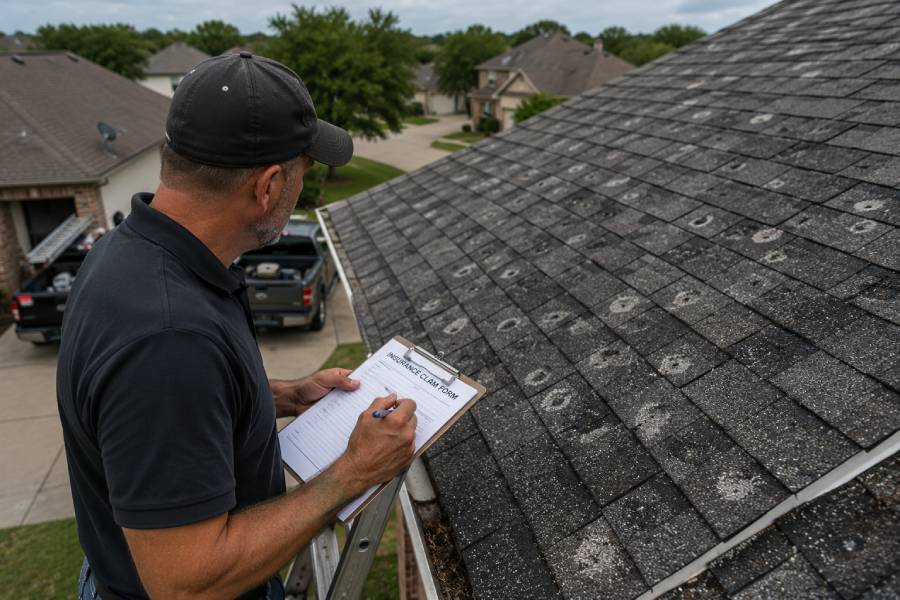
A severe North Texas hailstorm can leave homeowners with damaged shingles, gutters, vents, siding, and sometimes interior water intrusion.
But discovering possible hail damage does not mean you should immediately sign a roofing contract or assume your insurance company will replace the entire roof.
A better approach is to document the property, protect it from additional damage, review your insurance policy, report the loss promptly, and have the roofing system properly evaluated.
The Texas Department of Insurance recommends that homeowners photograph or record storm damage, make a list of damaged property, prevent additional damage when reasonably possible, save receipts for temporary repairs, and make damaged property available to the adjuster.
Texas homeowners can review the state’s full hail damage insurance claim guidance before beginning the process.
If your property recently experienced severe weather, information about professional storm and hail damage evaluations can also help explain which roof components may need attention.
Step 1: Make Safety the Priority
Do not climb onto a wet, steep, or storm-damaged roof.
A storm can leave:
- loose roofing materials;
- tree branches;
- slippery surfaces;
- exposed nails;
- unstable roof areas.
It is safer to document visible damage from ground level and leave close roofing inspection to someone properly equipped to work on the roof.
Step 2: Document the Storm and Visible Damage
Take photographs or video as soon as it is safe.
Useful documentation may include:
- hailstones on the ground;
- damaged gutters;
- dented downspouts;
- displaced roofing materials;
- fallen tree branches;
- siding damage;
- broken windows;
- interior water stains;
- active leaks.
Record the approximate date and time of the event as well.
Do not discard damaged materials before confirming whether the insurance company needs to inspect them.
Step 3: Review Your Insurance Policy
Before filing a claim, understand what policy you have.
Look for information about:
Wind and Hail Coverage
Confirm how your policy treats wind and hail losses.
Deductible
Some Texas homeowners have a separate wind or hail deductible.
A percentage deductible can represent a substantial out-of-pocket amount, so do not assume it is the same as the deductible for other claims.
Roof Coverage
Policies may treat older roofs differently.
Coverage can vary based on policy language, roof age, condition, material, and endorsements.
Reporting Requirements
Policies can contain deadlines or other requirements for reporting losses.
Do not assume you can wait indefinitely simply because the roof is not currently leaking.
Step 4: Report the Claim to Your Insurance Company
Use the claims phone number, website, or application supplied by your insurer.
Be prepared to provide:
- policyholder name;
- insured property address;
- approximate loss date;
- description of the weather event;
- known property damage;
- your contact information.
Write down your claim number and keep it with your other documentation.
Save copies of:
- emails;
- photographs;
- videos;
- estimates;
- receipts;
- claim documents;
- notes from telephone conversations.
Step 5: Prevent Additional Property Damage
If storm damage has created an opening in the roof, temporary measures may be needed to reduce additional rainwater entry.
Insurance policies commonly require policyholders to take reasonable steps to prevent further loss.
Keep receipts for temporary protective work.
Avoid authorizing unnecessary permanent roofing work before your insurer has had an opportunity to inspect the damaged property unless an emergency requires immediate action.
If the storm caused a specific leak or localized opening, learning more about professional roof repair can help you understand how repair needs may differ from complete replacement.
Step 6: Have the Roof Professionally Evaluated
A roofer and an insurance adjuster have different responsibilities.
A roofing professional can:
- inspect roofing materials;
- identify physical damage;
- document affected areas;
- measure the roof;
- prepare a construction estimate.
The insurance company determines:
- whether the damage is covered;
- how the policy applies;
- what scope is covered;
- how much the insurer will pay.
A contractor should not represent themselves as having authority to decide what your insurance company owes.
Step 7: Work With the Insurance Adjuster
The insurance company may send an adjuster to inspect the property.
If possible, make sure the adjuster can see all documented areas of concern.
Maintain a record of:
- adjuster’s name;
- inspection date;
- claim number;
- photographs provided;
- documents submitted;
- estimates provided;
- communications with the insurer.
If you do not understand something during the process, ask questions.
Step 8: Carefully Review the Insurance Estimate
When the insurer sends its estimate or claim decision, do not look only at the total dollar amount.
Review:
- measured roofing area;
- covered roof components;
- deductible;
- depreciation;
- replacement-cost provisions;
- excluded items;
- payment schedule.
If a term is unclear, ask the insurance company to explain it.
A roofing estimate and an insurance estimate may serve different purposes, which is another reason to compare the actual scope rather than only the total.
Step 9: Compare Roofing Proposals
Once you understand the damage, compare roofing estimates carefully.
If storm damage is extensive, a professional roof replacement evaluation may help establish what construction work is needed.
Compare proposals based on:
- roofing material;
- tear-off;
- underlayment;
- flashing;
- ventilation;
- decking;
- disposal;
- labor;
- cleanup;
- warranties.
Avoid choosing a contractor solely because the total happens to equal an insurance estimate.
Step 10: Understand Your Deductible
Texas law is particularly important here.
A contractor cannot legally waive, rebate, absorb, or otherwise help you avoid paying your insurance deductible.
The Texas Department of Insurance specifically warns that a contractor who provides an inflated estimate and then uses the difference to cover the deductible may be participating in insurance fraud.
Read the state’s explanation about why Texas contractors cannot waive insurance deductibles.
If someone promises a “free roof” because you will not need to pay your deductible, consider that a significant warning sign.
Can Your Roofer Negotiate Your Insurance Claim?
Texas also places restrictions on contractors who attempt to act as insurance adjusters.
A contractor who is performing or may perform the construction work cannot simply take on the role of your public insurance adjuster for that same loss.
The Texas Department of Insurance explains this distinction in its roofing and insurance law guidance.
Review the state’s Texas roofing and insurance law guidance if you are unsure about what a contractor should or should not be doing.
A roofer can explain:
- roofing condition;
- damage observed;
- materials required;
- construction pricing.
Insurance coverage and claim decisions remain separate matters.
What If Only One Part of the Roof Is Damaged?
A hailstorm does not automatically mean every roof slope needs replacement.
The appropriate construction work and insurance determination may depend on:
- location of damage;
- severity;
- number of affected areas;
- material condition;
- repairability;
- policy terms.
Ask the roofing professional to explain the physical damage and ask the insurer to explain its coverage decision.
Keeping those roles separate reduces confusion.
What If the Insurance Claim Is Denied?
A claim can be denied for a number of reasons.
For example, the insurer may determine that:
- damage resulted from aging rather than the reported storm;
- damage is below the deductible;
- the cause is excluded;
- policy requirements were not met;
- the insurer’s inspection reached a different conclusion.
Read the written determination and your policy.
If you disagree, ask your insurer what review or dispute procedures are available.
Warning Signs After a Major Texas Hailstorm
Severe storms often bring a large number of roofing solicitations.
Use caution when someone:
- pressures you to sign immediately;
- guarantees insurance approval;
- promises a “free roof”;
- offers to waive the deductible;
- promises a specific claim payment;
- asks for full payment before roofing work begins;
- refuses to provide a written scope;
- claims to control your insurance settlement.
A reliable contractor should be able to explain roofing work without making promises about what an insurance company will pay.
Understanding the Hail Damage Claim Process
A Texas hail damage claim should begin with documentation and your insurance policy, not with a promise of a free roof.
Document the damage safely, report the loss promptly, keep records, take reasonable steps to prevent additional damage, and allow the insurer to complete its claim process.
A roofing professional can evaluate the physical roofing system and provide a construction estimate, while the insurance company determines coverage under the policy.
Keeping those roles clear—and understanding your legal responsibility for the deductible—can make the process much easier to navigate.
Frequently Asked Questions
How quickly should I file a hail damage roof insurance claim in Texas?
Report suspected damage promptly. Texas Department of Insurance guidance recommends filing a hail claim quickly, while your specific policy may contain its own reporting requirements or deadlines.
Should a roofer file my insurance claim for me?
The homeowner normally reports the claim directly to the insurer. A roofer can inspect and document physical roofing damage and provide a construction estimate, but insurance coverage decisions belong to the insurer.
Can a Texas roofing contractor waive my deductible?
No. The Texas Department of Insurance states that contractors cannot legally waive your deductible or help you avoid paying it. Rebates or inflated estimates designed to offset the deductible can also create serious legal issues.
Does hail damage automatically mean insurance will replace my entire roof?
No. Coverage depends on actual damage, policy provisions, deductible, insurer findings, and other claim-specific factors. Hail damage can range from limited repairable concerns to more extensive roofing damage.