
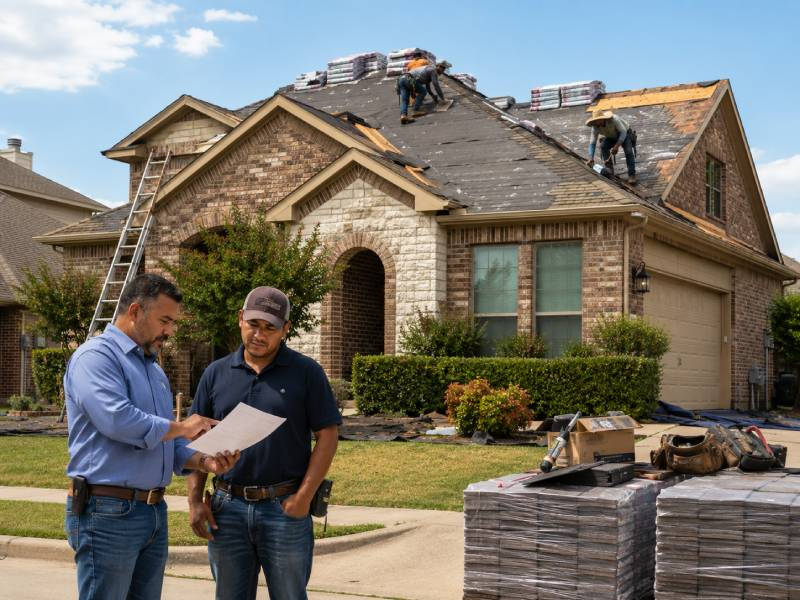
If you are planning to replace your roof, one of the first questions is probably: How much does a roof replacement cost in Texas?
There is no single price that applies to every home. Roof size, pitch, materials, tear-off requirements, accessibility, flashing, ventilation, and the condition of the roof decking can all influence the final cost.
For Dallas–Fort Worth homeowners, a smaller and relatively simple asphalt-shingle roof may sometimes start around $3,000 to $6,000, while many standard residential projects are more likely to fall around $6,000 to $14,000. Larger homes, steep roofs, complicated designs, premium shingles, or significant decking work can push the total higher.
Current Dallas pricing data reports an average roof replacement of approximately $10,054, with many projects between about $5,960 and $14,203. The same source shows a very broad range of roughly $2,900–$9,100 for a 1,000-square-foot roof, illustrating why smaller and simpler projects can sometimes cost substantially less.
You can compare those figures with the current Dallas roof replacement cost data from Angi.
If your existing roofing system has extensive damage or repeated problems, learning more about when a complete roof replacement may be appropriate can help you understand the options before requesting an estimate.
Typical Roof Replacement Costs in Dallas–Fort Worth
Here is a practical planning guide for homeowners:
| Roofing Project | Estimated Planning Range |
|---|---|
| Small, simple asphalt-shingle roof | $3,000–$6,000 |
| Standard asphalt-shingle replacement | $6,000–$14,000 |
| Larger or complex shingle roof | $12,000–$18,000+ |
| Impact-resistant shingles | $9,000–$18,000+ |
| Standing-seam metal roofing | $18,000–$35,000+ |
These figures are estimates rather than guaranteed prices. The only way to determine the actual cost of a property is to measure and evaluate the roof.
Another DFW pricing source estimates asphalt-shingle roof replacement in Dallas at roughly $5,950 to $12,200, with a typical modeled cost around $9,100.
For another local comparison, see this 2026 Dallas asphalt-shingle replacement estimate.
Why Roof Replacement Prices Vary So Much
Two houses with similar interior square footage can receive very different roofing estimates.
That is because contractors generally work from the actual roofing surface, not simply the square footage inside the home.
A 2,000-square-foot house may have considerably more roof surface once garages, porches, roof pitch, overhangs, and architectural features are included.
Roof Size
Roofing is commonly measured in squares. One roofing square equals 100 square feet of roof surface.
More roofing area means more shingles, underlayment, fasteners, labor, tear-off, and disposal.
This is why a smaller, straightforward home can sometimes have a roof replacement toward the lower end of the price range.
Roof Pitch
A steep roof is usually more difficult to work on than a relatively simple lower-pitch roof.
Additional fall protection, setup, equipment, and labor time may be needed.
As a result, two roofs with almost identical surface areas may have noticeably different installation prices.
Roof Complexity
A simple gable roof typically requires less labor than a roofing system containing numerous:
- valleys;
- hips;
- dormers;
- chimneys;
- skylights;
- wall transitions;
- vents;
- roof penetrations.
Each additional detail can require cuts, flashing, waterproofing, and installation time.
How Much Do Roofing Materials Affect the Price?
Material choice is one of the biggest variables in roof replacement cost in Texas.
Asphalt Shingles
Asphalt shingles remain a common choice for residential properties because they generally provide a lower initial cost than premium systems.
A straightforward asphalt-shingle replacement on a smaller property may fall toward the lower end of the market, while architectural shingles on larger or more complicated homes will cost more.
Impact-Resistant Shingles
Impact-resistant roofing products are designed to provide improved performance against impacts such as hail.
These products normally cost more than entry-level shingles because of the material and product specifications.
Whether they are worthwhile depends on factors including:
- location;
- hail exposure;
- product cost;
- roof design;
- warranty;
- homeowner priorities.
Metal Roofing
Metal roofing generally carries a higher initial investment than asphalt shingles.
Standing-seam systems can move a project well above $15,000 or $20,000 depending on the property.
Although metal can provide a longer expected service life in appropriate applications, homeowners should compare total installed price and system specifications rather than material cost alone.
Tear-Off and Disposal Costs
In most replacement projects, the existing roofing needs to be removed before the new roofing system is installed.
Removing old materials requires additional labor and disposal.
If a roof contains multiple existing layers, tear-off may take longer and generate more waste.
Homeowners comparing quotes should check whether removal and disposal are included rather than assuming they are part of every estimate.
What Happens If the Roof Decking Is Damaged?
The decking beneath shingles may not be completely visible until the existing roofing materials are removed.
Previous leaks or long-term moisture can sometimes leave sections deteriorated.
If damaged decking is found, those areas may need replacement before the new roofing system can be properly installed.
That additional work can raise the project cost.
For this reason, homeowners should ask how unexpected decking replacement will be priced before signing the contract.
Is Repair a Better Option Than Replacement?
Sometimes.
A homeowner dealing with one small leak, a few missing shingles, or localized flashing damage may not need an entirely new roof.
If the rest of the roofing system remains in usable condition, targeted roof repair may be worth evaluating before committing to full replacement.
Repair may make sense when:
- damage is concentrated in one area;
- most roofing materials remain in good condition;
- leaks are not recurring in multiple areas;
- storm damage is limited;
- previous repairs have not become frequent.
Replacement becomes more relevant when problems are widespread, leaks continue returning, materials are extensively deteriorated, or large areas of the roof have been damaged.
How Hail and Storm Damage Can Affect the Decision
Dallas–Fort Worth properties are regularly exposed to thunderstorms, hail, strong winds, and heavy rainfall.
A roof that was otherwise functioning normally can develop damage during a severe weather event.
However, storm exposure does not automatically mean a homeowner needs a complete replacement.
The roof should be evaluated based on:
- roofing material;
- condition before the storm;
- hail size;
- wind;
- number of damaged areas;
- repairability.
If your roofing concern appeared after severe weather, reviewing common storm and hail damage issues can help you understand what a professional may inspect.
Will Homeowners Insurance Pay for Roof Replacement?
Potentially, when damage is caused by a covered event.
Homeowners insurance generally should not be treated as a maintenance program for an aging roof. Coverage depends on the policy, cause of loss, deductible, roof condition, exclusions, and insurer’s claim determination.
The Texas Department of Insurance explains that roof coverage can vary based on policy terms and that homeowners should understand whether they have replacement-cost or other forms of roof coverage.
Homeowners can review the Texas Department of Insurance guidance on roof coverage and claims before making assumptions about what insurance will pay.
A roofing contractor can provide information about the physical condition of the roof and the construction scope, but the insurance company determines coverage under the policy.
What Should Be Included in a Roof Replacement Estimate?
A detailed estimate makes it easier to compare roofing companies fairly.
Look for information about:
- measured roof area;
- tear-off;
- disposal;
- roofing material;
- manufacturer and product;
- underlayment;
- starter shingles;
- ridge materials;
- flashing;
- ventilation;
- fasteners;
- decking replacement pricing;
- labor;
- cleanup;
- warranties;
- payment terms.
A $7,000 quote and a $10,000 quote may appear significantly different until you discover that one excludes flashing, tear-off, decking allowance, or other components.
Compare the scope of work, not just the final number.
Should You Get More Than One Roofing Estimate?
For a significant project such as roof replacement, getting two or three written estimates can be useful.
Ask each company to explain:
- what roofing system is being proposed;
- exactly what materials are included;
- whether existing roofing will be removed;
- how damaged decking is handled;
- what ventilation work is included;
- what warranty applies;
- what could increase the final cost.
This makes it easier to compare similar projects.
An extremely low price is not automatically a bargain, just as the highest estimate does not automatically mean higher quality.
Understanding Your Roofing Costs
For many Texas homeowners, the key is to distinguish between a small, straightforward roof and a typical full-size residential replacement.
A smaller asphalt-shingle project may sometimes start around $3,000 to $6,000, while many standard Dallas–Fort Worth roof replacements are more likely to fall around $6,000 to $14,000. Current published Dallas data puts the overall average around $10,000, which fits within that broader planning range.
Larger roofs, premium materials, steep slopes, complicated rooflines, multiple layers, or damaged decking can raise the cost considerably.
Online prices should therefore be used for budgeting—not as a guaranteed quote.
The most useful estimate will be based on your actual roof size, material choice, condition, and required scope of work.
Frequently Asked Questions
How much does a small roof replacement cost in Texas?
A small, straightforward asphalt-shingle roof may sometimes begin around $3,000 to $6,000. Price depends on actual roof area, roof pitch, accessibility, material, tear-off requirements, and whether decking or flashing work is required.
Is $10,000 a reasonable roof replacement price?
It can be. Current Dallas pricing data reports an average roof replacement cost of approximately $10,054. However, one home’s $10,000 project could be completely different from another property’s project, so the scope and roof measurements should always be reviewed.
Does one roof leak mean the entire roof needs replacement?
No. Many roof leaks come from localized problems such as flashing, roof penetrations, or damaged shingles. Replacement is generally more relevant when deterioration or damage is widespread or when repairs are becoming frequent.
Is metal roofing more expensive than asphalt shingles?
Usually. Metal roofing typically has a higher upfront installed cost than conventional asphalt shingles. The final difference depends on the specific metal system, roof size, pitch, complexity, and installation requirements.