
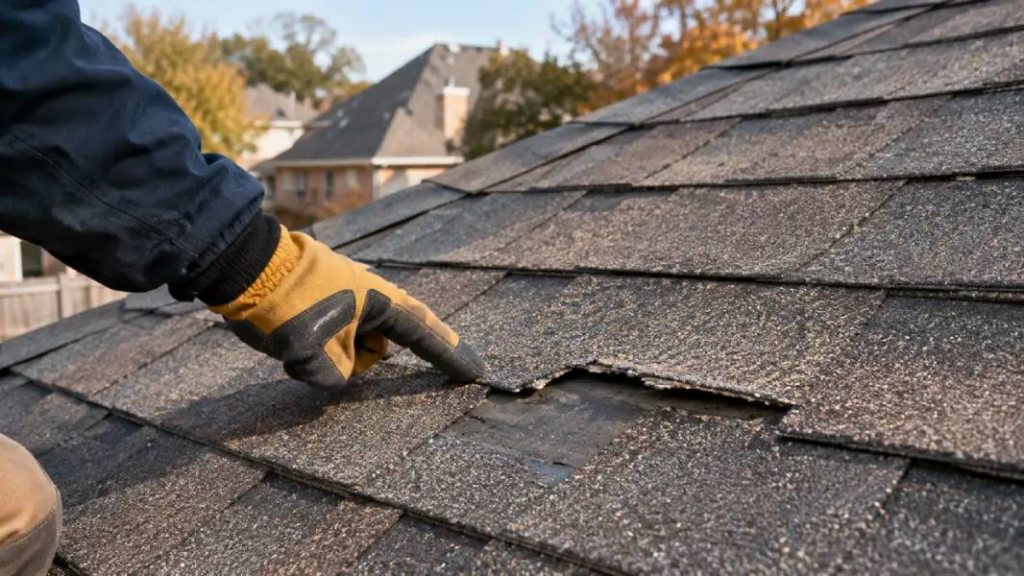
After a windy afternoon or a strong North Texas storm, you might notice something unusual about your roof. A section looks darker than the surrounding shingles, a roofing tab is lying in the yard, or a small patch of material appears to be missing.
At first, it may not seem like a major problem. After all, can one missing shingle really cause a roof leak?
The answer is yes. Even one missing shingle can increase the risk of water intrusion, depending on where the shingle was located and the condition of the roofing materials beneath it.
However, a missing shingle does not automatically mean water has already entered your home or that your entire roof needs replacement.
Understanding the risks, identifying possible damage, and knowing when to contact a roofing professional can help Dallas–Fort Worth homeowners respond appropriately.
Why Missing Roof Shingles Should Never Be Ignored
Asphalt shingles are designed to work together as overlapping layers that help direct rainwater down the roof and away from the underlying structure.
Each shingle contributes to the system’s ability to shed water and resist weather exposure. When one becomes damaged or disappears, the surrounding materials may no longer perform exactly as intended.
The exposed area might include roofing underlayment, fasteners, adhesive strips, or other materials that were not designed for prolonged direct weather exposure.
Although underlayment can provide secondary protection, it should not be treated as a permanent replacement for a missing roof covering.
The U.S. Department of Energy’s Building America guidance on asphalt shingle roofs explains the importance of properly installed shingles, roof-deck protection, and flashing in reducing water intrusion when roofing materials are exposed to high winds.
For homeowners, the practical lesson is straightforward: a single missing shingle deserves attention even when no interior leak is visible.
Will My Roof Leak If a Shingle Is Missing?
A missing shingle increases leak risk, but whether water enters immediately depends on several conditions.
The location of the missing material is important. Shingles near roof valleys, ridges, walls, or penetrations may affect areas where water moves or concentrates differently from a broad, uninterrupted roof surface.
Roof slope also matters. Water generally drains differently across steep and low-slope roof surfaces, and the condition of the underlying waterproofing layers affects the level of remaining protection.
The age of the roofing system can make a difference as well. Older underlayment, deteriorated seals, and previous repair areas may be less able to tolerate prolonged exposure.
Rainfall intensity and wind direction are additional factors. Wind-driven rain can move water toward openings that might not leak during lighter rainfall.
For these reasons, two homes with similar-looking shingle damage may experience very different outcomes.
A roofing professional can evaluate whether the underlying materials remain intact or whether the exposed area requires more extensive repair.
What Causes Roof Shingles to Go Missing?
Strong winds and thunderstorms
North Texas thunderstorms can generate powerful wind gusts that lift roofing materials or loosen shingles that are already vulnerable.
Once the shingle’s bond or attachment is compromised, additional wind exposure may displace it completely.
Damage may be concentrated near roof edges or corners, but it can occur elsewhere depending on the roof’s condition and wind exposure.
Aging roofing materials
Asphalt shingles gradually change with age and environmental exposure.
Over time, adhesive bonds may weaken, materials can become brittle, and repeated temperature changes may contribute to deterioration.
Older shingles may be more vulnerable to damage even during weather conditions that would not normally affect a newer, properly installed roof.
Improper installation
Roofing performance depends on correct installation practices, including appropriate fastening, material placement, and adherence to manufacturer instructions.
Incorrectly positioned nails, insufficient fastening, or unsuitable installation methods can contribute to premature material displacement.
When missing shingles appear repeatedly in the same area, installation quality should be considered during the inspection.
Previous storm damage
A roof may survive an earlier storm without obvious material loss, only to show problems later.
Previously loosened or damaged shingles can become more vulnerable during subsequent weather events.
This is one reason homeowners should document visible changes after severe storms, even when leaks do not appear immediately.
Signs a Missing Shingle May Already Be Causing Damage
Visible damage on the roof is one warning sign, but homeowners should also watch for changes inside the property.
New ceiling stains, peeling paint, damp insulation, discolored attic decking, or unexplained moisture near an exterior wall may suggest water is entering somewhere.
A musty smell in an attic can also justify further investigation, although the odor alone does not prove that a roof leak is present.
Outside the home, watch for roofing granules accumulating in gutters, exposed underlayment, lifted shingles, and roofing debris scattered around the yard.
If you notice these symptoms, consider arranging a professional evaluation rather than assuming the damage is limited to the missing shingle.
Homeowners can learn about available shingle roofing services in Dallas–Fort Worth when seeking a professional assessment of asphalt roofing materials.
Can You Wait Until the Next Rainstorm to Repair Missing Shingles?
Waiting for visible water damage is generally not a good way to determine whether a roof needs attention.
A roofing system can allow small amounts of moisture into vulnerable areas before obvious stains appear on ceilings or walls.
Water may travel along framing, insulation, or other building materials before reaching a visible interior surface.
By the time a stain becomes noticeable, the actual source may be some distance away.
The safest approach is to document the missing material and arrange an inspection within a reasonable time, especially when more rain is expected.
If active water intrusion is already occurring, the situation may require faster professional attention to limit damage to ceilings, insulation, and interior finishes.
Avoid placing a ladder against the house or climbing onto the roof during windy or wet conditions.
How Professionals Repair Missing Roof Shingles
The appropriate repair depends on the condition of the roof and the surrounding materials.
For limited damage, a roofer may be able to replace individual shingles and restore the affected section without replacing the entire roofing system.
However, repair involves more than placing a new shingle over the exposed area.
A professional should examine the surrounding shingles, fasteners, adhesive bonds, and underlying materials to determine whether additional damage exists.
If the surrounding shingles are brittle, heavily worn, or difficult to work with, replacing a small area may be more complicated.
Matching materials can also be a challenge, particularly when a specific shingle product has been discontinued or weathered significantly.
The finished repair should restore the roof’s water-shedding function and use methods appropriate for the installed roofing system.
Property owners who need an evaluation can explore roof repair services in DFW to connect with local roofing professionals.
When Is Roof Replacement More Appropriate Than Repair?
Finding a missing shingle does not mean homeowners must immediately budget for a full replacement.
A localized repair may be appropriate when the surrounding roofing system is otherwise in serviceable condition and the damage has not affected a larger area.
Replacement becomes a more realistic consideration when shingles are deteriorating across multiple roof slopes, leaks repeatedly occur, or the roof has widespread damage.
Significant granule loss, persistent cracking, repeated wind-related failures, and aging materials may also influence the recommendation.
The decision should consider the complete roof condition, not simply the number of shingles missing.
If a contractor recommends replacement, ask for photographs and an explanation of why a localized repair would not provide an appropriate solution.
A clear assessment should distinguish between necessary work, recommended improvements, and optional upgrades.
What Should You Do Immediately After Finding Missing Shingles?
Start by documenting the situation from a safe location.
Photograph the damaged section if it can be seen from the ground. If a shingle has landed in your yard, you may photograph it as part of the property’s condition records.
Check accessible indoor areas for signs of water intrusion, particularly the attic and rooms below the damaged section.
Monitor weather forecasts and avoid storing valuable belongings directly beneath an area where water is actively entering.
If water reaches an electrical fixture, outlet, or wiring, stay clear of the affected area and seek appropriate professional assistance.
Do not attempt rooftop repairs using household glue, loose plastic sheeting, or improvised fasteners. Such methods may fail, damage roofing materials, or create additional safety risks.
Arrange a roofing evaluation to determine the extent of the damage and the appropriate next steps.
How DFW Homeowners Can Reduce Future Shingle Damage
Roof maintenance cannot eliminate every storm-related risk, but several preventive practices can help identify developing concerns.
Schedule periodic visual roof checks and pay attention to changes after strong winds or hail.
Keep nearby trees maintained so loose branches do not repeatedly strike the roof. Check drainage systems and look for areas where roofing materials appear to be lifting or deteriorating.
Maintain records of inspections and previous repairs, including photographs showing which sections were affected.
When planning a new roof, discuss installation quality, wind-resistance ratings, and appropriate materials with the contractor.
The FORTIFIED Roof program from the Insurance Institute for Business & Home Safety provides information about construction and reroofing practices intended to improve resistance to certain severe-weather hazards.
Not every home requires a specialized roofing system, but understanding available resilience measures can help homeowners ask better questions during roofing projects.
Frequently Asked Questions
Will a roof leak with one shingle missing?
It can. Whether a leak occurs depends on the missing shingle’s location, the condition of the underlayment, surrounding materials, and weather exposure. A missing shingle should be evaluated even when there is no visible interior damage.
How urgent is replacing a missing roof shingle?
A missing shingle should be addressed promptly because the exposed area may become more vulnerable to rain and wind. Active leaks, extensive material loss, or additional storm damage may require more urgent attention.
Can you replace a single roof shingle?
Sometimes. A localized replacement may be possible when surrounding materials remain in good condition. A roofing professional should confirm whether the repair can be completed without damaging adjacent shingles.
Will homeowners insurance cover missing shingles?
Coverage depends on the policy, cause of damage, exclusions, deductible, and the insurer’s findings. Storm-related material loss may be handled differently from deterioration caused by ordinary aging. Review your policy and document the damage before making assumptions about coverage.
How can I tell if shingles are missing without climbing onto the roof?
Look for uneven roofing patterns, darker exposed areas, missing tabs, and shingle pieces in the yard. Binoculars and photographs taken from a safe location may help, although hidden damage generally requires a professional assessment.
Find Roofing Help for Missing or Damaged Shingles in DFW
A single missing shingle may appear minor, but it can expose vulnerable parts of a roofing system to additional weather damage. Prompt evaluation is often more practical than waiting for an interior leak to develop.
Whether you live in Dallas, Fort Worth, Arlington, Plano, or another North Texas community, understanding your roof’s condition helps you make informed decisions about repair and replacement.
Texas Local Roofer helps property owners connect with roofing professionals serving the area. If strong winds or recent storms have damaged your roof, explore storm and hail damage roofing services in DFW to find appropriate roofing assistance.