
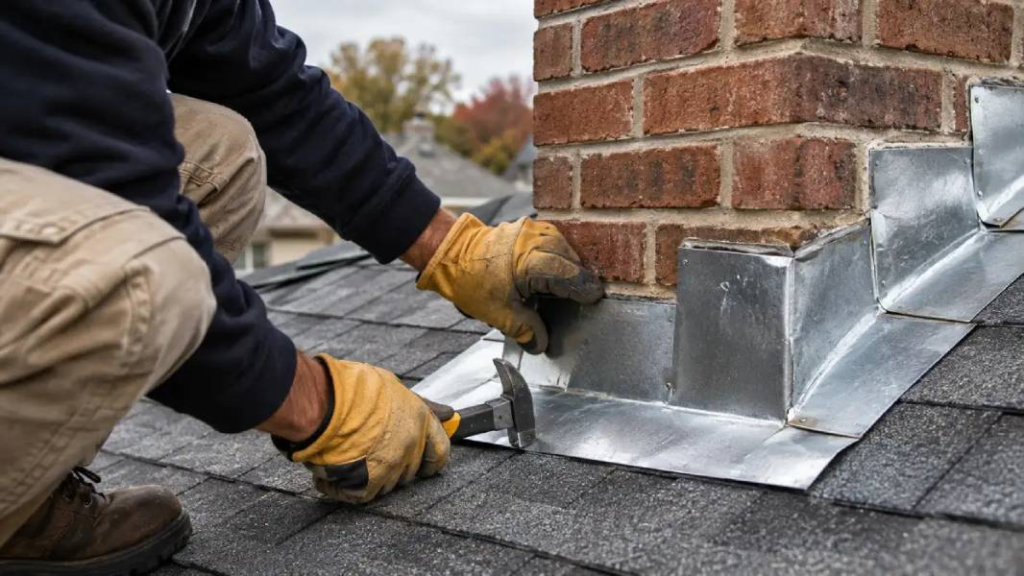
A roof can have shingles that appear perfectly intact and still develop a serious leak. In many cases, the problem begins around a chimney, vent pipe, skylight, or another location where roofing materials connect to a different surface.
These vulnerable areas depend on roof flashing to direct water away from openings and joints.
When flashing becomes loose, corroded, damaged, or improperly installed, rainwater may find a path into the roofing system. Over time, even a relatively small defect can contribute to moisture problems inside a home.
For homeowners across Dallas–Fort Worth, understanding when roof flashing repair may be necessary can make it easier to respond before water damage spreads.
This guide explains what flashing does, how to identify possible failure, the types of repairs professionals may recommend, and the factors that influence repair costs.
What Is Roof Flashing and Why Is It Important?
Roof flashing is a weather-resistant material installed around roofing transitions, penetrations, and other vulnerable areas.
It is often made from metal, although certain applications use compatible flexible or manufactured flashing products.
The purpose of flashing is to guide rainwater over the roofing system and away from areas where two different building components meet.
For example, flashing may be installed where shingles meet a brick chimney or where a plumbing vent passes through the roof.
Without properly installed flashing, water may enter through small gaps even if the primary roof covering remains in relatively good condition.
The U.S. Department of Energy’s guidance on step and kick-out flashing explains how properly integrated flashing directs water away from roof-to-wall connections.
The most important point for homeowners is that flashing is not simply a decorative metal trim. It is part of the roof’s overall water-management system.
Common Types of Roof Flashing on DFW Homes
Different areas of a roof require different flashing methods. The correct design depends on the roofing materials, roof geometry, and the surface being protected.
Chimney flashing
Chimney flashing protects the joints where a chimney rises through the roof.
Depending on the chimney design, the installation may involve apron flashing, step flashing, counterflashing, and other components intended to direct water around the structure.
Deteriorated mortar joints, damaged metal, or gaps between flashing components can create potential pathways for water.
Roof vent flashing
Plumbing vents and other roof penetrations often use specialized flashing assemblies.
These may include metal bases and flexible boots designed to fit around vent pipes.
Aging rubber components, cracked collars, and loose flashing connections can allow water to reach the roof deck.
Step flashing
Step flashing is commonly used where an asphalt shingle roof meets a vertical sidewall.
Individual pieces overlap with the surrounding shingles to help direct water down the roof surface.
If the pieces are missing or incorrectly integrated with wall materials, water may enter the wall or roofing assembly.
Valley flashing
Roof valleys collect runoff from adjoining roof slopes.
Depending on the roofing design, valleys may use metal flashing, membranes, or other water-management components.
Damage near a valley can be particularly concerning because rainfall from multiple roof surfaces may concentrate in that area.
Seven Warning Signs Your Roof Flashing May Need Repair
Flashing problems are not always obvious from the ground. However, several signs may indicate that closer inspection is necessary.
1. Water stains near a chimney
Discoloration on ceilings or walls near a chimney may be associated with flashing defects, deteriorated masonry, or another moisture source.
Because water can travel before becoming visible, the stain may not be directly beneath the actual opening.
2. Loose or lifted metal flashing
Visible metal pieces that appear bent, detached, or lifted away from the roof surface deserve attention.
Wind exposure and previous roofing work can sometimes contribute to displacement.
3. Cracked vent pipe boots
Flexible flashing boots may deteriorate over time because of heat, sunlight, and ordinary weather exposure.
Cracks or separation around a pipe can create openings for rainwater.
4. Rust or corrosion
Some metal flashing materials can develop corrosion, particularly when protective coatings deteriorate or incompatible materials are used together.
Corrosion does not always mean failure is occurring, but advanced deterioration may weaken the affected component.
5. Repeated leaks after heavy rain
A leak that appears during particular weather conditions may involve flashing, roof valleys, wind-driven rain, or another localized weakness.
Recurring leaks should be investigated rather than repeatedly concealed with interior repairs.
6. Deteriorated sealant
Cracked or separated sealant around a flashing connection may indicate a maintenance concern.
However, not every flashing detail relies on exposed sealant. Proper flashing must function as part of the intended water-shedding assembly.
7. Moisture inside the attic
Damp decking, wet insulation, or stains around roof penetrations may indicate water intrusion.
A professional can help determine whether the source is flashing, roofing materials, condensation, or another building-system problem.
Homeowners dealing with unexplained water intrusion can explore roof leak repair services in DFW to find professionals who can assess the likely cause.
What Causes Roof Flashing to Fail?
Weather and temperature exposure
Dallas–Fort Worth roofing systems experience substantial weather changes throughout the year.
Sunlight, heating and cooling cycles, strong winds, and rainfall can place stress on roofing materials and their connections.
Over time, movement between materials may contribute to deterioration at vulnerable joints.
Poor installation practices
Flashing needs to be installed in a manner that properly overlaps surrounding materials and directs water outward.
Incorrect placement, incompatible products, or inadequate integration with underlayment can compromise the system.
A newly installed roof is not automatically immune to flashing problems if critical details were overlooked.
Aging materials
Metal, rubber, and sealant products do not all age at the same rate.
A vent boot may deteriorate while nearby shingles remain serviceable. Similarly, an older chimney connection may need attention before the rest of the roof requires replacement.
Previous repairs or alterations
Installing new vents, skylights, equipment, or other rooftop components can affect existing flashing.
If the modified area is not properly restored, the roofing system may develop a weak point.
This is why roofing alterations should include an evaluation of the surrounding water-management details.
Roof Flashing Repair vs. Replacement: Which Is Necessary?
Not every damaged flashing component requires extensive roofing work.
Minor defects may sometimes be corrected through localized repairs when the surrounding materials are sound and the flashing can be restored appropriately.
More significant deterioration may require replacing individual flashing assemblies or portions of the roofing material around them.
For example, a damaged vent boot may be replaceable, while a badly deteriorated chimney flashing system could require more involved work.
A qualified roofer should determine whether the existing installation can be repaired reliably or whether replacement is the better long-term option.
Homeowners should be cautious about solutions that rely entirely on applying roofing cement over visible gaps without addressing the cause of the problem.
A proper repair should restore intended water drainage and integrate the corrected flashing with the surrounding roof materials.
What Determines Roof Flashing Repair Cost in DFW?
The cost of flashing repair varies because roofing problems differ in size, location, complexity, and accessibility.
A small vent flashing replacement generally involves a different scope of work from a complicated chimney repair that requires removing shingles and replacing several metal components.
The following factors may affect a contractor’s estimate.
Location of the damage: Repairs near steep roof slopes, complex intersections, or difficult access points may require more time and safety preparation.
Type of flashing: The materials and installation methods used for chimney flashing, vent boots, valleys, and metal roof transitions can differ considerably.
Extent of water damage: When moisture has affected roof decking, insulation, or framing, additional restoration may be necessary.
Condition of surrounding materials: Older or brittle shingles may require careful removal or replacement while repairing flashing.
Project complexity: Custom metal fabrication, multiple penetrations, and unusual roof designs can increase the amount of work involved.
Rather than relying on a generic online price, homeowners should request an itemized estimate describing the affected area, recommended materials, labor, and any related repairs.
Property owners in Collin County can also explore roofing services in Plano, TX when looking for assistance with leaks or damaged roof connections.
Can You Repair Roof Flashing Yourself?
Some homeowners may be tempted to apply sealant to a suspicious area, particularly when a leak appears small.
However, roof flashing repair involves determining how water is entering the structure and how the roof’s overlapping materials should direct it away.
An incorrectly applied repair can trap moisture, interfere with drainage, or hide the underlying defect.
Working on a roof also introduces fall hazards, especially when surfaces are steep, wet, or damaged.
Professional roofers have the equipment and experience needed to evaluate flashing components and determine whether repairs can be completed safely.
The Department of Energy’s guidance on flashing existing roof penetrations discusses how flashing should be integrated with roofing materials around vents and other openings.
Homeowners can use that information to understand the importance of correct installation, but it should not replace an appropriate professional assessment.
How to Prevent Future Roof Flashing Problems
Preventive maintenance can help identify developing flashing problems before they lead to repeated water intrusion.
Arrange periodic roof inspections and ask the roofer to review chimneys, plumbing vents, skylights, valleys, and roof-to-wall intersections.
Keep drainage areas clear so water can move away from vulnerable roof connections.
After significant wind or hail events, check for visible metal displacement or newly appearing interior moisture.
Maintain photographs and records of previous flashing repairs. These may help identify recurring problem areas if additional leaks develop.
If you are planning a roof replacement, ask how existing flashing will be evaluated and whether particular components need to be replaced.
It is also helpful to confirm that new rooftop equipment or exterior modifications will be properly integrated with the roof’s water-management system.
Frequently Asked Questions
Can roof flashing be repaired without replacing the entire roof?
Often, yes. Some flashing problems can be corrected with localized repairs or replacement of individual components. The appropriate solution depends on the condition of the surrounding roofing system.
How much does roof flashing repair cost?
Costs depend on the flashing type, roof accessibility, extent of deterioration, and whether surrounding materials require replacement. An inspection and itemized estimate are the most reliable ways to understand the likely project cost.
Can damaged roof flashing cause interior ceiling stains?
Yes. Water entering through a defective flashing connection may travel through roofing or framing materials before becoming visible inside the property. However, ceiling stains can also have other causes.
How long does roof flashing typically last?
Flashing service life varies by material, installation quality, environmental exposure, and maintenance. Metal flashing and flexible vent boots may have different replacement needs, so inspection is more useful than assuming all flashing lasts the same number of years.
Is roof flashing repair an emergency?
It may be urgent when water is actively entering the property, a significant section is displaced, or nearby roofing materials are damaged. Minor concerns without active leakage still deserve timely evaluation.
Find Roof Flashing Repair Help in Dallas–Fort Worth
Roof flashing protects some of the most vulnerable connections in your roofing system. When those components deteriorate or fail, leaks may develop even though the surrounding shingles appear to be in good condition.
Understanding the warning signs and arranging appropriate professional evaluation can help you avoid unnecessary delays and make informed repair decisions.
Texas Local Roofer connects homeowners and property owners with roofing professionals across North Texas. If damaged flashing is allowing water into your home or you need urgent help assessing a roof leak, explore emergency roofing services in DFW to find roofing assistance in your area.